REGION · EUROPE / EURASIA
LAT 53.4129°N · LNG 008.2439°W
STATUS · ACTIVE INVESTIGATION
SENSOR · LiDAR / DRONE / HUMINT
SITES · TUAM / SEAN ROSS / BESSBOROUGH
KHTHON · GEOINT UNIT
13:52:31 UTC

Khthon · Active Investigation

Ireland

Ireland's mass grave cases centre on the legacy of Catholic Church–run Mother and Baby Homes, where unmarried women were confined and their children died in numbers hidden for decades. Khthon's casework combines historic map and LiDAR overlay analysis with survivor testimony to confirm burial sites the state has only recently begun to formally investigate.

Published Reports

Sort
GEOSPATIAL VIEW · IRELAND — MOTHER & BABY HOME SITES 53.0000°N 007.5000°W
MODE · GEOINT
SENSOR · LiDAR / HUMINT

Situation Overview

Institutions,
Hidden Graves

Ireland's mass grave cases centre on the legacy of Catholic Church–run Mother and Baby Homes — institutions where unmarried women were confined and their children subjected to neglect, illness, and profound stigma. Eighteen such homes and County Homes operated across Ireland between 1922 and 1998, run by religious orders including the Bon Secours Sisters, the Sisters of the Sacred Hearts, and the Sisters of Mercy.

At Tuam in County Galway, local research uncovered the deaths of nearly 800 children between 1925 and 1961, without burial records. Excavations later confirmed that many had been buried in underground chambers originally associated with sewage treatment. At Sean Ross Abbey, investigators confirmed infant burials in the site's so-called Angels' Plot, though the full extent of burials there remains unresolved. At Bessborough — one of the largest homes, with over 900 recorded infant deaths — the location and extent of burials remains contested and only partially resolved.

The state responded to Tuam with the Institutional Burials Act 2022, creating a dedicated office to oversee excavation, recovery, and respectful reburial. Work began there in July 2025 — a landmark effort to address institutional violence hidden in plain sight for decades.

Mother and Baby Homes are one category among several in Ireland's mass grave landscape, each with a distinct history and investigative shape. Magdalene Laundries — a parallel Church-run system confining women rather than mothers specifically — produced their own mass grave at High Park, Dublin, where 155 women were exhumed in 1993. Industrial schools, where children were transferred after leaving Mother and Baby Homes, present cases like St. Brigid's in Loughrea, where no burial records exist at all. Older still are Ireland's Great Famine mass graves at 19th-century workhouse sites — a different era and cause of death entirely, and one the Bon Secours Sisters initially tried to misattribute the Tuam remains to. And separately, the Disappeared — 17 people abducted and secretly buried during the Troubles — represent an active, ongoing case with its own confidential recovery process and 4 people still missing. These are noted below as sites Khthon has identified but not yet built full casework on.

GEOINT Methodology

Confirming Sites
Decades Later

Ireland illustrates a different access problem than Khthon's conflict-zone casework: the sites are physically reachable, but the evidence is buried under decades of institutional silence and rebuilt landscape. Khthon leans on historic records and imagery layering, combined with survivor and witness testimony.

  • Historic map and LiDAR overlay. At Tuam, layering historic Ordnance Survey maps and architectural records over drone and LiDAR imagery identified surface disturbances consistent with the underground chambers later confirmed to hold remains.
  • Cross-referencing death and burial records. The Tuam case itself was built this way — cross-referencing recorded child deaths against burial records at local cemeteries surfaced nearly 800 children with no corresponding grave.
  • Structural and layout comparison. At Sean Ross Abbey, coffin evidence confirmed burials within the recognised Angels' Plot boundary, but the question of whether all children who died there are accounted for within it remains open.
  • Survivor testimony. Aging witnesses hold knowledge of practices and locations — particularly at Bessborough — that may never otherwise surface. Their memories, combined with geospatial analysis, bridge the gap between ground evidence and the wider reckoning now unfolding with the Church.

Methods Applied Across This Casework

Records, Imagery,
and Testimony

01 · GEOINT

Map & LiDAR Layering

Historic Ordnance Survey maps and institutional architectural records are layered over drone and LiDAR imagery to detect surface disturbances and structural anomalies inconsistent with the site's known, official use — the approach that identified Tuam's repurposed sewage chambers.

02 · RECORDS

Death-to-Burial Cross-Reference

Recorded child deaths at each institution are cross-referenced against burial records at the parish and local cemeteries expected to hold them. A gap between the two — as at Tuam, where nearly 800 recorded deaths had no matching burial record — is the first signal of an undocumented grave site.

03 · HUMINT

Survivor Testimony

Aging survivors and former residents hold direct knowledge of burial practices and locations that institutional records never captured. Their accounts anchor and cross-check the geospatial findings, particularly at unresolved sites like Bessborough where official records remain incomplete.

03 · Timeline

Key Events

1922–1998

Mother and Baby Homes operate across Ireland

Eighteen Mother and Baby Homes and County Homes operate across Ireland during this period, run by religious orders including the Bon Secours Sisters, the Sisters of the Sacred Hearts, and the Sisters of Mercy. Unmarried mothers are confined, often under coercion from families or the state. Their children face high mortality rates from malnutrition, disease, and neglect, and are buried with minimal documentation.

1975

Bessborough — final closure

Bessborough House in County Cork — operated by the Sacred Hearts of Jesus and Mary — closes after decades as one of Ireland's largest Mother and Baby Homes. Over 900 infant deaths are later recorded there. The location and extent of infant burials remains only partially resolved, with ground surveys indicating possible burial anomalies beyond the known plot.

1993

Catherine Corless begins research — Tuam

Local historian Catherine Corless begins investigating the Tuam Mother and Baby Home in County Galway, run by the Bon Secours Sisters. Cross-referencing death records with burial sites, she finds nearly 800 children recorded as dead with no corresponding burial records in local cemeteries. Her findings, initially dismissed, later trigger a national scandal and state investigation.

2014

Underground chambers discovered at Tuam

Published findings lead to physical investigation of the Tuam site. Ground surveys reveal underground sewage infrastructure repurposed as a burial location. Skeletal remains of infants and young children are found in chambers originally associated with the septic system. The discovery generates international coverage and pressure for state action.

2015–2021

Commission of Investigation — Mother and Baby Homes

The Irish Government establishes the Commission of Investigation into Mother and Baby Homes. Over six years it examines 18 institutions. Its final report, published in January 2021, documents over 9,000 child deaths, confirms the Tuam septic tank burial site, and acknowledges widespread abuse and neglect — though its handling of survivor testimony is criticised by advocacy groups as inadequate.

2022

Institutional Burials Act enacted

The Irish Government passes the Institutional Burials Act 2022, establishing a dedicated office with powers to excavate, recover, and ensure respectful reburial of remains from institutional sites. Tuam is designated as the first site for intervention — a landmark acknowledgement of state responsibility.

July 2025

Excavations begin at Tuam

Physical excavation of the Tuam site commences under the Institutional Burials Act, combining archaeological methods, forensic anthropology, and ground-penetrating radar surveys. Remains are recovered and subject to identification processes — the first formal state-led intervention at an Irish institutional burial site.

Ongoing

Khthon's Ireland casework

Khthon's confirmed Ireland investigations to date are Tuam, Sean Ross Abbey, and Bessborough, built from historic map and LiDAR overlay, death-to-burial cross-referencing, and survivor testimony. Sean Ross Abbey and Bessborough remain partially unresolved, and Khthon continues to advocate for expanded ground assessment beyond officially recognised boundaries.

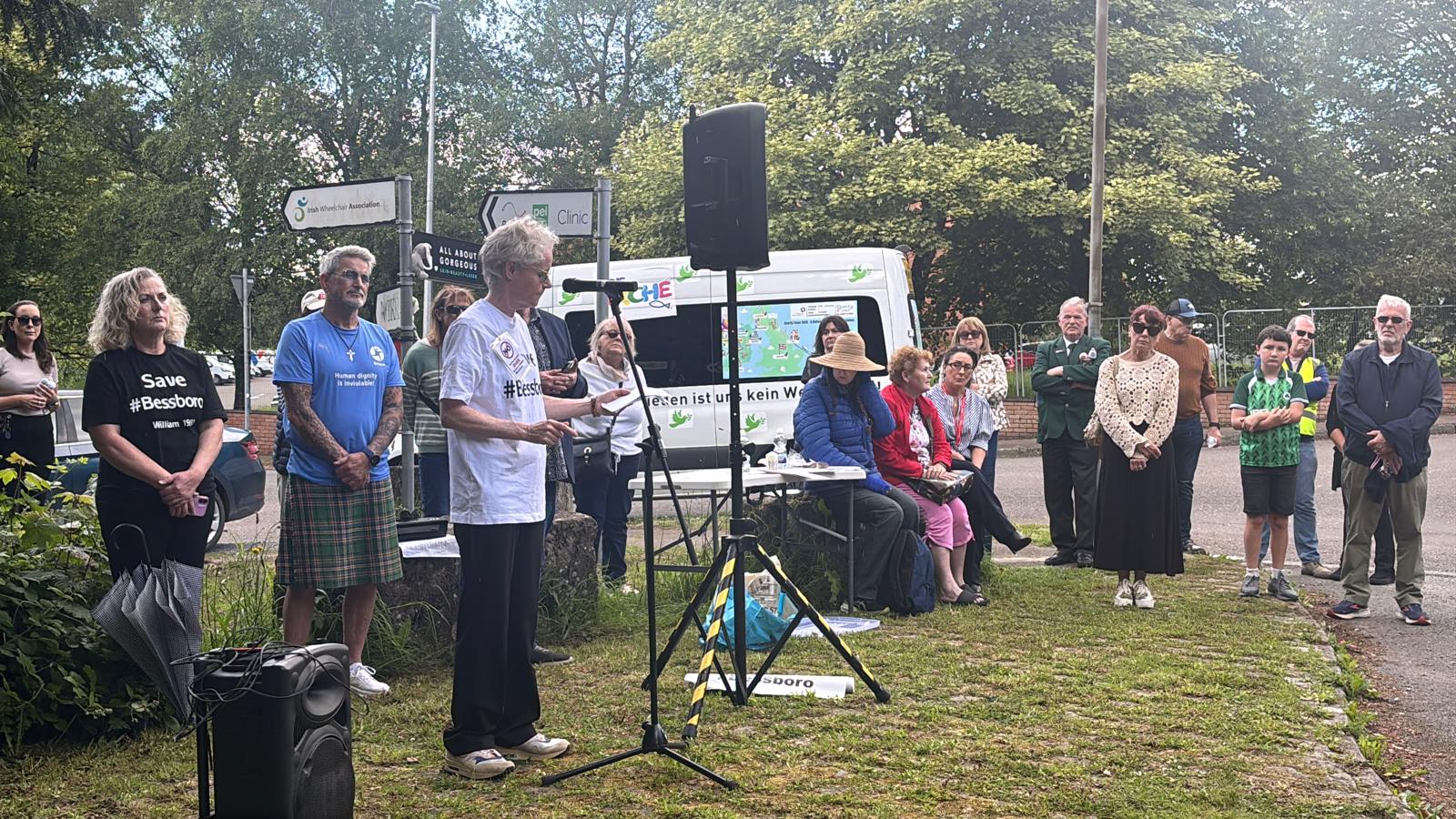
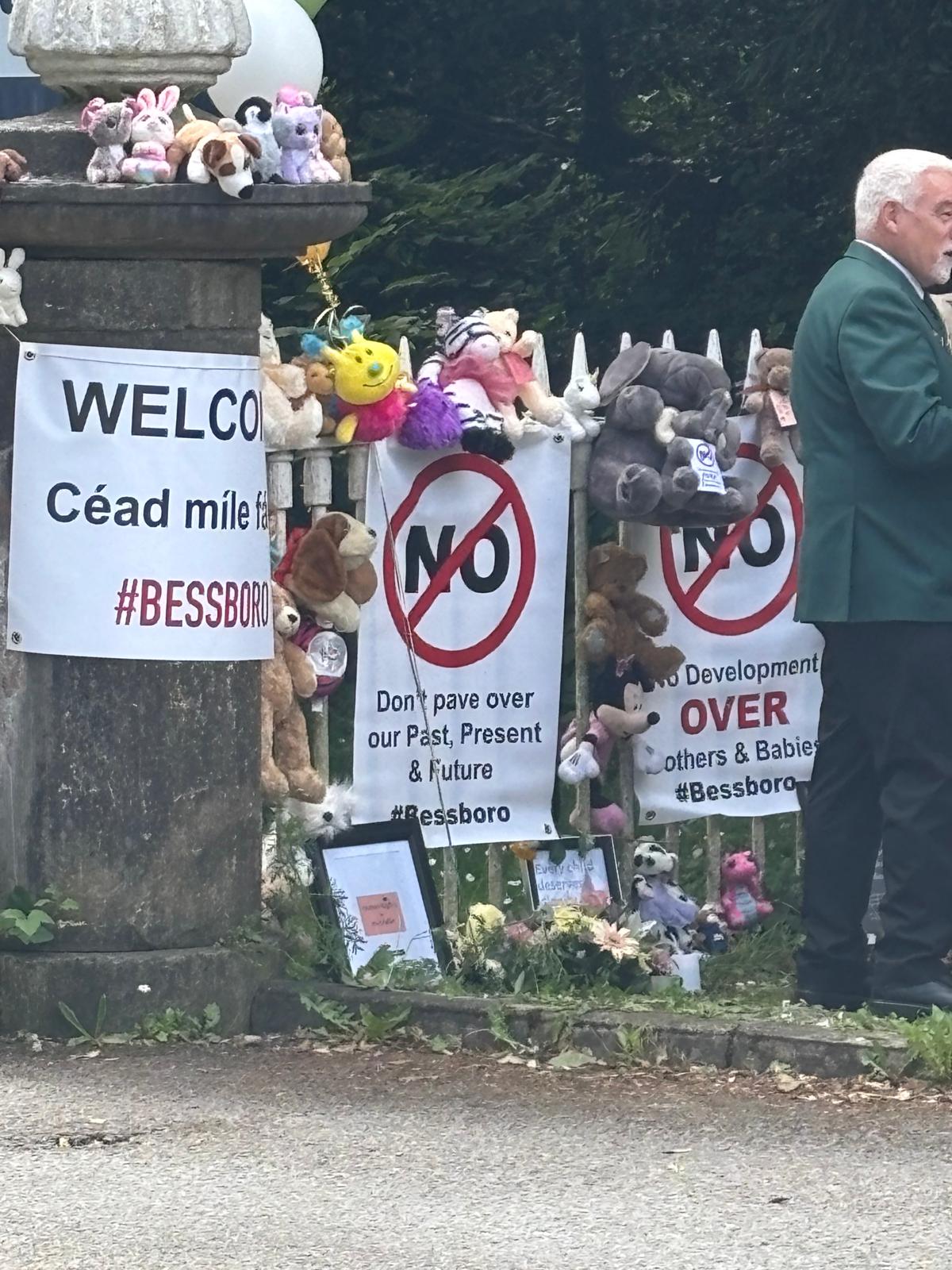
Bessborough protest, June 8, 2026
Bessborough Protest · Jun 8, 2026Click to expand ⤢
Bessborough protest, June 8, 2026
Bessborough Protest · Jun 8, 2026Click to expand ⤢

More Research

Browse Khthon's full catalogue of country and case reports across seven global regions, or get involved with our ongoing investigations.